Custom Web Development Benefits for Startups in 2026

Custom Web Development Benefits for Startups in 2026
Custom web development for startups is the process of building a website from scratch to match a startup’s specific business logic, user expectations, and growth plans. Unlike template-based sites, a custom-built site gives you full control over every pixel, every function, and every user interaction. Startups that invest in tailored web solutions recover their initial costs within 12–24 months through higher conversion rates and operational efficiency. Compliance standards like ADA and WCAG 2.2 require custom semantic HTML that plugins simply cannot deliver. The benefits of custom web development for startups go far beyond aesthetics. Your website is either a strategic asset or a missed opportunity.
1. How does custom web development enhance startup brand identity?
Full design control is the single biggest brand advantage custom development gives you. With a template, you are essentially wearing someone else’s outfit to your own party. With custom code, every color, typeface, animation, and interaction reflects your brand’s actual personality.
Custom development lets you embed branding at a granular level. That means your button hover states, your loading animations, and your error messages all feel like you. That consistency builds trust faster than any logo redesign ever could.
-
Unique visual language: Custom sites are built around your brand system, not a generic grid.
-
Tailored user interfaces: Navigation, layout, and content hierarchy match how your specific audience thinks.
-
Accessibility built in: ADA and WCAG 2.2 compliance requires custom semantic HTML. Plugins are not enough and failing here can trigger costly lawsuits.
-
Brand narrative control: Every page section can tell your story in sequence, not just fill a pre-made slot.
Brand awareness compounds over time when your site feels distinct. Founders who treat their website as a brand asset, not a checkbox, consistently outperform those who don’t.
Pro Tip: Build a style guide before writing a single line of code. It keeps your brand consistent across every page, every developer, and every future update.

2. What are the performance and scalability advantages?
Speed is not a luxury. It is a ranking factor, a conversion factor, and a first impression. Custom-coded websites avoid the plugin bloat that slows template sites to a crawl. Template sites face plugin conflicts, security vulnerabilities, and performance slowdowns that often force expensive rebuilds before a startup even hits its stride.
Here is what custom development gives you on the performance side:
-
Lean codebase: Only the code your site actually needs gets shipped. No dead weight.
-
Faster load times: Faster pages improve both SEO rankings and user engagement directly.
-
Scalable cloud architecture: Startups expecting to scale beyond 50,000 monthly active users within 18 months should deploy cloud platforms like AWS with containerized deployments from day one.
-
Reduced technical debt: Custom code eliminates the plugin dependency spiral that creates security risks and forces costly rebuilds.
-
Full SEO control: Custom architecture gives you granular control over URLs, markup, and site structure, which directly improves crawl efficiency and search rankings.
The compounding effect here is real. A faster, cleaner site ranks better, converts better, and costs less to maintain over time. That is a triple win most template-based startups never get to experience.
3. How does custom web development improve user experience and conversion rates?
User experience is where custom development pays for itself fastest. When your site is built around your actual user journey, not a generic template flow, friction disappears. And when friction disappears, conversions go up.
-
User path optimization: Custom builds map navigation to how your specific customers actually think and behave.
-
Conversion-focused functionality: Checkout flows, sign-up sequences, and lead forms are built for your business logic, not a one-size-fits-all template.
-
Performance as UX: Clean semantic markup and fast load times reduce bounce rates and keep users engaged longer.
-
Personalization at scale: Custom backends can serve different content to different user segments without a third-party plugin doing the heavy lifting.
“Custom web development can increase startup website conversion rates by 200–400% through better user path optimization and performance improvements. That kind of lift does not come from swapping a template’s color scheme.” Source: Mobile App Daily
That conversion range is not a typo. It reflects what happens when you stop forcing users through a generic funnel and start building one that actually fits them. For a startup with tight margins, a 200% conversion lift can be the difference between a second funding round and a pivot.
4. What operational efficiencies can startups achieve with custom web development?
Custom websites are not just front-end experiences. They are operational engines. Custom code enables direct API hooks that eliminate manual data entry and the errors that come with it. Your site can talk directly to your CRM, your inventory system, your accounting software, and your customer support platform.
Think about what that means in practice. A founder who used to spend Friday afternoons reconciling form submissions with a spreadsheet now has that data flowing automatically into the right system. That is hours back every week, and fewer mistakes compounding into bigger problems.
Pro Tip: When scoping your custom build, prioritize core functionality like user authentication and real-time integrations first. These validate your business model faster than any design flourish.
| Workflow | Template approach | Custom approach |
|---|---|---|
| CRM data entry | Manual copy-paste from forms | Automatic API sync |
| Inventory updates | Plugin with sync delays | Real-time backend integration |
| Customer support routing | Generic contact form | Logic-based ticket creation |
| Reporting | Manual exports | Live dashboard with custom queries |
The table above is not hypothetical. These are the exact friction points that slow down early-stage teams. Custom development removes them systematically, and the long-term ROI from that efficiency compounds as your team grows.
You can also explore how custom CRM integrations connect with broader startup operations for a clearer picture of what this looks like in practice.
5. When should startups choose custom web development over templates?
Not every startup needs a custom site on day one. But most startups need one sooner than they think. The key is matching your tech choice to your actual growth trajectory, not your current budget anxiety.
Startups should carefully match their tech choice to growth projections and technical capacity. Getting this wrong means a painful and expensive re-platform 18 months later, right when you can least afford the distraction.
Here are the signals that point toward custom development:
-
Your product is complex. If your site needs to do more than display information and collect emails, a template will fight you at every step.
-
You expect rapid user growth. Scaling a template site past a certain threshold creates performance and security problems that custom architecture avoids entirely.
-
Your brand needs to stand out. In a crowded market, looking like every other startup on the same template is a brand liability.
-
You need deep integrations. If your site must connect with multiple backend systems, custom API hooks are the only reliable path.
-
You are thinking about total cost of ownership. Total cost of ownership for custom sites becomes favorable after the initial investment by reducing recurring fees and maintenance headaches.
The honest answer is this: templates are great for validating an idea in week one. Custom development is what you build when you are serious about scaling.
Key takeaways
Custom web development gives startups a compounding advantage in brand identity, performance, conversions, and operations that template-based sites cannot match at scale.
| Point | Details |
|---|---|
| Brand identity control | Custom builds embed your brand at every interaction level, building trust faster than templates. |
| Conversion rate lift | Custom user path optimization can increase conversion rates by 200–400% compared to generic templates. |
| Performance and SEO | Lean custom code improves load times, crawl efficiency, and search rankings without plugin bloat. |
| Operational integration | Direct API hooks eliminate manual data entry and connect your site to CRM, inventory, and accounting systems. |
| ROI timeline | Startups typically recover custom development costs within 12–24 months through efficiency gains and higher conversions. |
What I actually think about custom web development for startups
Here is my honest take, and I say this as someone who has watched founders make this call in both directions: most startups treat their website as a static expense when it should be their hardest-working team member.
I get the hesitation. Custom development costs more upfront. It takes longer. It requires more decisions. But here is what nobody tells you: the template you chose to save time in month two becomes the thing slowing you down in month fourteen. I have seen it happen enough times that it stopped surprising me.
The founders who win with custom web development are not the ones with the biggest budgets. They are the ones who plan their infrastructure early, prioritize core functionality over flashy features, and treat their site as something that appreciates in value as the business scales. That mindset shift is everything.
My advice? Do not wait until your template is visibly breaking to make the switch. Build with intention from the start. Your future self (and your dev team) will thank you.
— Coumba Evelyn
How Coumba Win Design builds custom websites that actually scale
Coumba Win Design works with startup founders who know their website should do more than look good. It should perform, convert, and grow with the business.
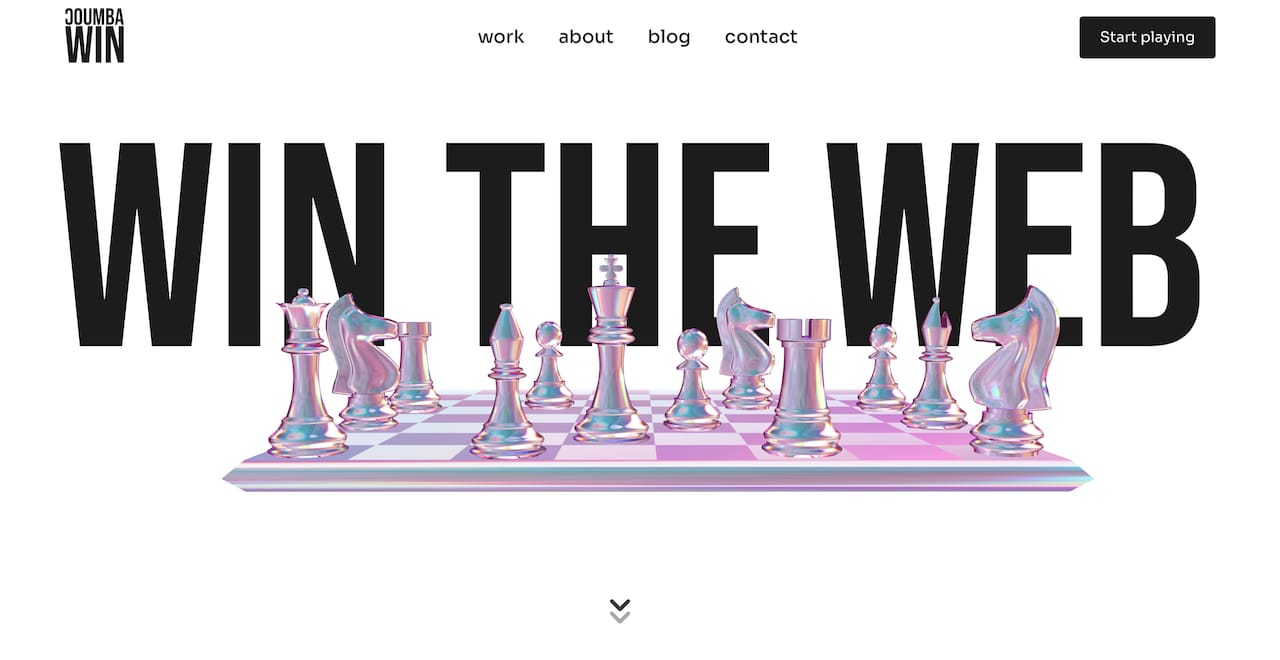
Coumba Win Design builds custom web solutions that align with your brand, your user journey, and your backend systems from day one. The work covers everything from modular design components to full platform development, with a focus on outcomes over aesthetics. If you are preparing for a big moment, the Demo Day Kit brings your brand together fast. Every project starts with your growth goals, not a template.
FAQ
What is custom web development for startups?
Custom web development is the process of building a website from scratch to match a startup’s specific business logic, user needs, and growth plans. It gives founders full control over design, functionality, and integrations that template-based sites cannot provide.
How much can custom web development improve conversion rates?
Custom development can increase startup conversion rates by 200–400% through better user path optimization and faster load times. That lift comes from eliminating friction in the user journey, not just improving visual design.
When does custom web development make financial sense for a startup?
Startups typically recover their custom development investment within 12–24 months through higher conversions and operational efficiency gains. The total cost of ownership becomes favorable faster than most founders expect.
Why do templates create problems for growing startups?
Plugin dependencies create technical debt that slows sites down, introduces security vulnerabilities, and often forces expensive rebuilds at the worst possible time. Custom code eliminates that dependency spiral entirely.
Does custom web development help with SEO?
Custom architecture gives startups full control over URLs, semantic markup, and site structure. That granular control directly improves crawl efficiency and search rankings in ways that template-based sites with limited SEO settings cannot replicate.
Recommended