Benefits of Professional Web Design for Business Growth

Benefits of Professional Web Design for Business Growth
Professional web design is the practice of building a website with deliberate structure, visual strategy, and technical precision to drive measurable business outcomes. Your website is not a digital brochure. It is your hardest-working team member, running 24/7 without a coffee break, generating leads while you sleep, and making first impressions you never get to supervise. The benefits of professional web design go far beyond aesthetics. They include higher conversions, stronger brand credibility, better search rankings, and real, trackable revenue growth. If you are a founder or business owner still debating whether to invest, this breakdown is for you.
1. Benefits of professional web design start with credibility
Your website has about 7 seconds to convince a visitor you are worth their time. That is not a metaphor. Visitors make subconscious credibility judgments almost instantly, and poor design erodes trust before they even read your value proposition. Think of it like showing up to a pitch meeting in a wrinkled shirt. The content might be great, but the first impression already did damage.
Over 75% of users judge business credibility based on website design quality. That means three out of four potential customers are forming opinions about your business based on your color palette, typography, and layout before they read a single word you wrote. Consistent visual design signals that you take your business seriously, and visitors pick up on that signal fast.
-
Use a consistent color palette tied to your brand identity across every page
-
Choose typography that is readable on all screen sizes, not just desktop
-
Invest in professional photography or high-quality custom illustrations
-
Keep layouts clean and uncluttered so visitors know exactly where to look
Pro Tip: Place testimonials and case studies on your site prominently. These pages often become the most visited sections of a professional site and directly validate purchase decisions for new visitors.
2. How responsive design drives conversions and customer experience
User-centric design is the practice of building every page element around what your visitor needs to do next, not what looks cool to you. It sounds obvious, but most DIY sites get this backwards. The result is a site that looks fine on a laptop and falls apart on a phone, which is where most of your customers actually are.

Mobile-optimized websites boost conversion rates by 40%, and that number compounds when you layer in load speed improvements. Cutting load time from 4 seconds to 1.5 seconds increases conversions by 17.5%. These are not vanity metrics. They represent real customers who stayed instead of bounced.
The full picture of how design drives conversions comes down to a few repeatable principles:
-
Make your primary call-to-action visible without scrolling on mobile
-
Reduce page load time by compressing images and minimizing unnecessary scripts
-
Use clear navigation labels so visitors never wonder where they are
-
Design forms with the fewest possible fields to reduce friction
-
Test button placement and color contrast for accessibility and click-through rate
Well-designed websites with optimized UX achieve up to 400% higher conversion rates. That figure comes from businesses that spent just 10% of their budget on UX improvements. The return on that investment is not theoretical. It shows up in your contact form submissions, your booked calls, and your checkout completions.
Pro Tip: Use heat mapping tools like Hotjar or Microsoft Clarity to see exactly where visitors drop off. Fix those spots before running any paid traffic to your site.
3. SEO advantages built into professional web design
Search engine optimization is not just about keywords in blog posts. The structure of your website determines whether Google can crawl it, understand it, and rank it. Professional web design bakes SEO architecture into the foundation, not as an afterthought.
Clean code, proper heading hierarchy, schema markup, and fast load times all signal to search engines that your site is trustworthy and well-organized. These technical elements help you rank for transactional and “near me” searches that bring buyers, not just browsers. Enhancing user experience for SEO is now a direct ranking factor, not a separate discipline.
SEO-focused websites deliver a median ROI of approximately 748%, generating organic leads at zero marginal cost over time. Unlike paid ads that stop the moment your budget runs out, organic traffic compounds. A well-structured page you published two years ago can still bring in leads today.
| SEO Element | DIY Template | Professional Design |
|---|---|---|
| Clean, crawlable code | Often bloated | Built to spec |
| Schema markup | Rarely included | Standard practice |
| Core Web Vitals score | Frequently poor | Prioritized |
| Mobile-first structure | Inconsistent | Always included |
| Organic lead generation | Limited ceiling | Compounds over time |
Professional websites also integrate with email marketing platforms, CRM systems, and e-commerce tools to track customer behavior and amplify marketing effectiveness. That integration is nearly impossible to achieve cleanly on a template-based site without significant workarounds.
-
Prioritize Core Web Vitals: Largest Contentful Paint, Cumulative Layout Shift, and Interaction to Next Paint
-
Use structured data markup to help AI-powered search surfaces feature your content
-
Build internal linking structures that distribute authority across key service pages
-
Create location-specific landing pages if you serve multiple markets
4. The real ROI of investing in a professional website
Let’s talk money, because that is usually where the hesitation lives. A professional website for a small business typically runs between $2,000 and $5,000. That sounds like a lot until you do the math. If your site generates just 2 to 3 new customers per month, and your average customer value is $500, the site pays for itself in weeks.
“A professional website is not a marketing expense. It is infrastructure. It works while you sleep, scales without hiring, and compounds in value the longer it runs.” — Semola Digital
Professional web design removes structural constraints that limit growth even when your marketing budget is healthy. You can pour money into ads, but if the landing page is slow, confusing, or untrustworthy, that spend evaporates. A well-built site makes every other marketing channel more effective.
The long-term value breaks down like this:
-
24/7 lead generation without additional labor costs
-
Lower cost per acquisition as organic traffic grows over time
-
Higher marketing efficiency because paid traffic converts at better rates on a professional site
-
Reduced churn because a better user experience builds loyalty, not just transactions
-
Scalability without rebuilding from scratch as your business grows
Websites function as compound-value digital infrastructure, continuously generating organic leads long after the initial investment. That is the opposite of a paid ad campaign, which delivers results only while the budget is active.
5. Custom web design vs. DIY templates: what actually differs
The template vs. custom debate is not really about aesthetics. It is about ceilings. Template-based platforms like Squarespace or Wix give you a fast start, but they impose performance limits that become real problems as your business grows. Custom professional web design sustains higher conversions and organic visibility compared to DIY templates, which create performance ceilings that limit growth.
| Feature | DIY Template | Custom Professional Design |
|---|---|---|
| Brand differentiation | Low (shared templates) | High (built for your brand) |
| Page speed control | Limited | Full control |
| SEO architecture | Basic | Advanced |
| Conversion optimization | Generic | Tailored to your audience |
| Scalability | Hits a ceiling | Grows with your business |
| Integration flexibility | Restricted | Open and extensible |
Templates work fine for a side project or a placeholder site. For a business that depends on its website to generate revenue, they are a liability. The structural ceiling templates impose means you eventually rebuild anyway, usually at a higher cost and with lost momentum.
Custom design also means your site reflects your actual brand, not a slightly modified version of a theme 50,000 other businesses are using. That distinction matters to visitors more than most founders realize. User-centric design builds a perception of quality that influences word-of-mouth referrals, and that perception starts with how unique and intentional your site feels.
B2B companies that invest in professional redesigns see 47% more lead conversions and a 38% bounce rate reduction compared to their previous template-based sites. Those numbers represent real pipeline, not just prettier pages.
Key takeaways
Professional web design is a compound investment that builds credibility, drives conversions, and generates organic revenue long after the initial build is complete.
| Point | Details |
|---|---|
| First impressions are design-driven | Over 75% of users judge credibility by design quality within 7 seconds of landing. |
| UX improvements multiply revenue | Optimized UX can deliver up to 400% higher conversion rates with targeted improvements. |
| SEO is built into the structure | Professional design integrates clean code and schema markup for compounding organic growth. |
| Custom design outperforms templates | Custom sites sustain higher conversions and avoid the performance ceilings templates impose. |
| ROI is fast and compounding | A $2,000–$5,000 investment can pay off in weeks and generate leads indefinitely. |
What I actually think about professional web design
I have worked with enough founders to know the pattern. They spend months perfecting their pitch deck, their product, their pricing. Then they slap up a Wix site in a weekend and wonder why their conversion rate is embarrassing. (No judgment. I get it. The site feels like a “later” problem until it is very much a “right now” problem.)
Here is what I have learned: your website is not a marketing tool. It is your company’s first employee. It never calls in sick, never misquotes your pricing, and never forgets to follow up. But like any employee, it performs exactly as well as the investment you put into it. A rushed, template-based site gives you rushed, template-based results.
The thing most people underestimate is the compounding effect of micro-optimizations. Shaving a second off your load time, tightening your navigation, adding a testimonial above the fold. None of those feel dramatic. Together, they are the difference between a site that converts and one that just exists. I have seen founders triple their inbound leads without changing their offer, their pricing, or their ad spend. They just fixed the site.
My honest advice? Stop thinking of your website as a cost. It is infrastructure. And infrastructure that works pays for itself, then keeps paying.
— Coumba Evelyn
What Coumba Win Design builds for founders who are serious about growth
If you read this far, you already know your website should be doing more work than it is. Coumba Win Design builds custom, UX-optimized websites for startups and growing businesses that treat design as a competitive advantage, not an afterthought.
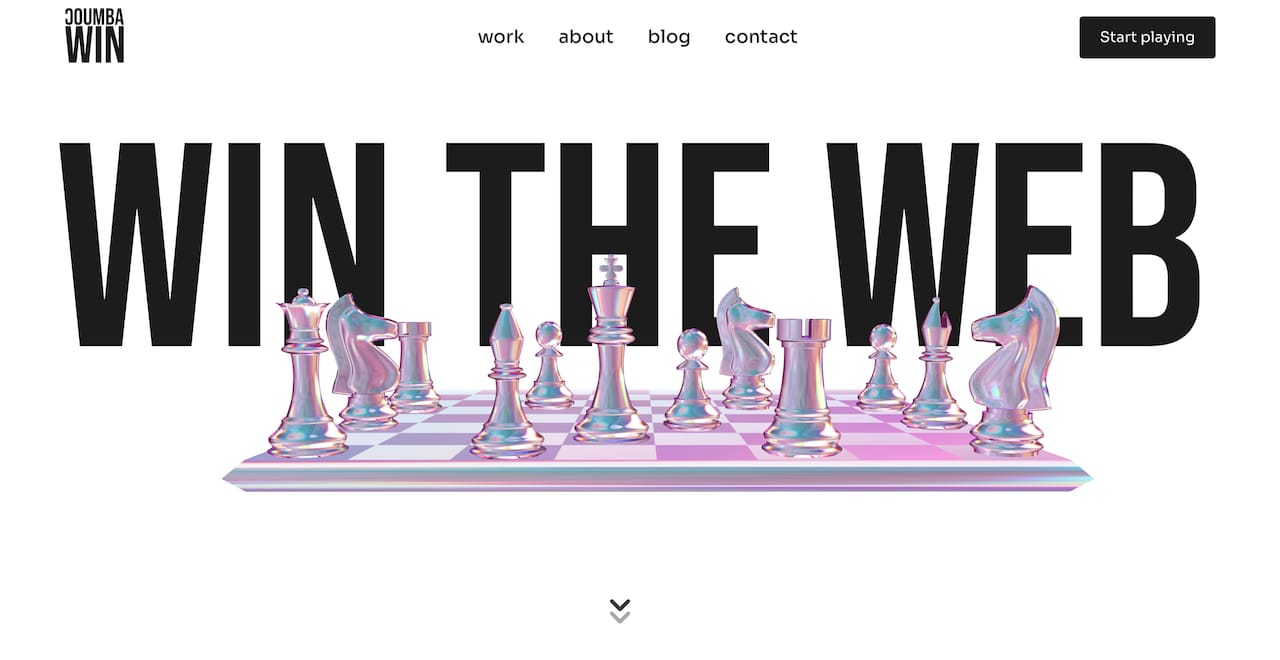
Every project at Coumba Win Design integrates brand identity, SEO architecture, and conversion-focused design from day one. No templates. No generic layouts. Just sites built to perform for your specific audience and goals. You can start by exploring the style guide to see how intentional design decisions translate into real user outcomes. When you are ready to build something that actually works, the team is ready to work with you.
FAQ
How much does professional web design cost for a small business?
Most small business websites run between $2,000 and $5,000 for a professional build. That investment typically pays off within weeks when the site generates 2 to 3 new customers per month.
Why does web design affect SEO rankings?
Search engines rank sites based on technical factors like page speed, clean code, mobile responsiveness, and structured data. Professional design addresses all of these at the structural level, not as add-ons.
What is the difference between a custom site and a DIY template?
Custom sites are built around your brand, audience, and conversion goals. DIY templates impose performance and scalability limits that become growth barriers as your business expands.
How quickly can a professional website improve conversions?
Mobile optimization alone boosts conversions by 40%, and load speed improvements from 4 seconds to 1.5 seconds increase conversions by 17.5%. These gains can appear within weeks of launch.
Are websites still relevant with AI-powered search growing?
Websites are more critical than ever. AI-powered search surfaces pull from structured, well-organized web content, meaning a professionally built site with schema markup and clean architecture has a direct advantage in AI-driven results.
Recommended