Why Startups Need Strong Branding to Grow Fast

Why Startups Need Strong Branding to Grow Fast
Strong branding is the fastest signal a startup sends to customers, investors, and talent before a single conversation happens. Most founders treat it as decoration. That’s a costly mistake. Why startups need strong branding comes down to one uncomfortable truth: in a crowded market, you don’t get a second chance to communicate your value. Brands like Airbnb and Google didn’t wait until they had millions of users to define who they were. They built recognizable identities early, and that identity did the selling for them. Your brand is your visible growth mouthpiece, and it’s working (or not working) 24/7.
Why startups need strong branding from day one
The importance of branding for startups isn’t about having a pretty logo. It’s about rapid value communication to people who have zero time to figure you out. Investors scan pitch decks in minutes. Customers decide whether to trust a website in seconds. A strong brand collapses that decision window in your favor.
Here’s what strong branding actually does for a startup in practical terms:
-
Attracts customers faster by making your value proposition instantly legible
-
Reduces customer acquisition cost (CAC) because clear positioning means less ad spend convincing the wrong people
-
Signals credibility to investors who are pattern-matching for competence and seriousness
-
Helps recruit talent who want to join a company with a clear mission and identity
A $4M ARR direct-to-consumer brand cut CAC by 28% and grew revenue 32% after rebuilding its brand voice and creative process. That’s not a coincidence. That’s what happens when branding stops being an afterthought and starts being an operational input.
Branding also affects how premium you can price. A startup with a sharp, consistent identity can charge more than a competitor with a muddled one, because perceived value is real value in the mind of the buyer. Think about how Notion positioned itself against legacy productivity tools. The brand felt modern, calm, and smart. That feeling justified the switch for millions of users.

What are the core elements of effective startup branding?
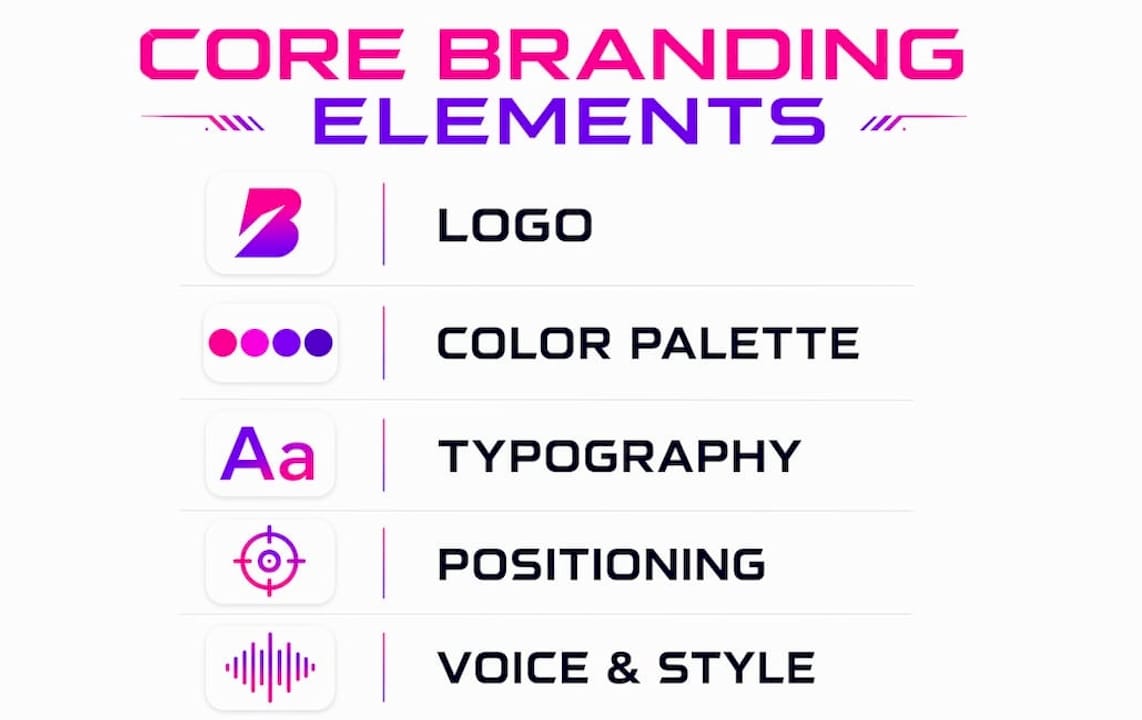
Effective startup branding, often called brand identity in professional circles, goes well beyond visuals. It’s the full system of signals your company sends. Here’s how to build it without losing your mind (or your runway):
-
Lock your positioning first. Who are you for, and what do you do better than anyone else? This single sentence drives every other decision. Shopify’s minimum viable brand (MVB) framework starts here, not with colors or fonts.
-
Define your brand voice. Are you direct and no-nonsense like Basecamp? Warm and encouraging like Duolingo? Your voice should match your audience’s expectations and your product’s personality.
-
Build a basic visual identity. Logo, color palette, and typography. These three elements, applied consistently, create recognition faster than any ad campaign.
-
Write a positioning statement. One or two sentences that explain what you do, for whom, and why it matters. This becomes the backbone of your website copy, pitch deck, and social media.
-
Create a simple brand guideline document. Even a two-page PDF with your colors, fonts, and tone of voice rules prevents the chaos that comes when your team scales.
Pro Tip: Don’t wait for perfection. Launch with an MVB, get market feedback, and iterate. The fastest path to a great brand is shipping a good one and learning from real users, not spending six months in a design sprint.
The MVB approach lets you act fast, test branding elements, and iterate based on feedback without burning budget on a full rebrand six months later. It’s the branding equivalent of a lean startup methodology, and it works.
Why is brand consistency crucial for startup growth?
Consistency is where most startups quietly bleed money and opportunity. You can have a great logo and a sharp positioning statement, but if your Instagram sounds like a different company than your website, you’re creating friction. Friction kills conversions.
The data here is hard to ignore. Consistent brand presentation increases revenue by 23 to 33%, according to Lucidpress and Nielsen research. That’s not a marginal improvement. For a startup doing $500K in annual revenue, that’s potentially $115K to $165K in additional top-line growth from doing the same work more consistently.
“Trust is built through consistency. Repeated brand voice strengthens trust and shortens buyers’ journeys.” — Atom Writer, summarizing Sprout Social and Smallbizgenius data
Brand voice consistency also drives social media engagement up 23% and follower growth by 60%, with purchase intent rising 45%. Those numbers represent real pipeline for a startup that’s still building awareness. Meanwhile, 71% of businesses report that inconsistent branding causes customer confusion and lost sales. That’s not a small risk. That’s the majority of companies actively undermining their own growth.
Here’s a quick comparison of what consistent versus inconsistent branding produces:
| Metric | Consistent branding | Inconsistent branding |
|---|---|---|
| Revenue impact | +23 to 33% lift | Increased media spend to compensate |
| Customer trust | Faster purchase decisions | Confusion and drop-off |
| Social engagement | +23% engagement, +60% followers | Fragmented audience growth |
| CAC | Lower, due to clearer targeting | Higher, due to mixed signals |
The operational fix is simpler than founders expect. A voice guide, a set of creative templates, and a shared asset library are enough to enforce consistency across a small team. Coumba Win Design builds exactly these systems for startups that are scaling fast and can’t afford to let brand chaos slow them down.
How can startups implement and measure effective branding strategies?
Implementation is where good intentions go to die. Here’s the sequence that actually works, based on Shopify’s expert guidance on branding sequencing for early-stage companies:
-
Step 1: Lock positioning. Before any design work starts, write your positioning statement. Who you serve, what problem you solve, and why you’re different.
-
Step 2: Ship an MVB. Logo, color palette, typography, and a one-page brand guide. This takes days, not months, and gets you into market fast.
-
Step 3: Measure what matters. Track CAC, website conversion rate, social engagement, and direct brand search volume. These are your branding KPIs.
-
Step 4: Iterate. Use real data to refine your messaging and visuals. A/B test your homepage headline. Try two different brand voices on social. Let the market tell you what’s working.
One case study worth studying: a new market entry campaign using optimized messaging and visuals lifted brand awareness by over 20% in a competitive FMCG market. The lesson is that branding optimization is measurable, and you should be measuring it from the start.
Pro Tip: Treat your brand assets like code. Version-control them, document them, and make them reusable. Operationalizing brand assets into templates and voice guides is what separates startups that scale their creative output from those that start from scratch every campaign.
Affordable tools like Canva, Figma, and Notion work well for early-stage brand management. You don’t need an enterprise DAM system on day one. You need a shared folder, a brand guide, and a team that actually reads it.
Minimum viable brand vs. full-scale branding: what fits your startup?
This is the question every founder wrestles with, usually at 2am before a product launch. Here’s the honest answer: it depends on your stage, your market, and your launch strategy.
The MVB approach is the right call for most early-stage startups. It’s faster, cheaper, and designed for learning. You ship a functional brand, get it in front of real customers, and use their reactions to inform your next iteration. The risk of waiting too long to brand is real. Founders who delay often end up with ad hoc visual identities assembled from Fiverr gigs and Canva templates that don’t connect. That patchwork look signals immaturity to investors and customers alike.
Full-scale branding makes sense when you’re entering a market where perception is everything from day one. Think luxury, health, or enterprise software. In those categories, a polished, fully realized brand identity is table stakes, not a nice-to-have. The risk of investing prematurely in full branding is equally real. If your positioning isn’t stable yet, a $50K brand overhaul can become obsolete in three months when you pivot.
The smart move is to treat branding as a living system. Start with an MVB, establish your positioning, and invest in full-scale branding once you have product-market fit. Pivoting your brand without alienating customers is possible if you bring them along through transparent communication and gradual visual evolution. Slack did this. Mailchimp did this. Both brands evolved significantly from their early identities without losing their audiences.
Key takeaways
Strong branding is a measurable growth driver for startups, not a cosmetic expense. Founders who treat brand consistency, positioning, and voice as operational priorities see lower CAC, higher revenue, and faster customer trust.
| Point | Details |
|---|---|
| Brand from day one | Early branding communicates value to customers, investors, and talent before any conversation starts. |
| MVB over perfection | Launch with a minimum viable brand to test positioning fast and iterate based on real market feedback. |
| Consistency drives revenue | Consistent brand presentation lifts revenue 23 to 33% and reduces customer confusion and lost sales. |
| Operationalize your assets | Voice guides and creative templates turn branding into a repeatable system that lowers CAC over time. |
| Measure branding like a product | Track CAC, conversion rates, and brand search volume to know whether your branding is actually working. |
What I’ve learned watching founders get branding wrong (and right)
I’ll be honest: I’ve seen founders spend $80K on a brand identity before they had a single paying customer. I’ve also seen founders launch with a logo made in Google Slides and somehow close a Series A. Neither extreme is the lesson here.
What I’ve actually learned, working with startups at different stages, is that the founders who win with branding treat it like a product. They ship early, they measure obsessively, and they iterate without ego. The ones who struggle either wait too long (hoping traction will validate the need for branding) or overbuild too early (confusing polish with strategy).
The most underrated move I see? Treating brand voice as an operational asset, not a creative document that lives in a Google Drive folder nobody opens. When you build voice guides and creative templates into your actual workflow, your team produces more content, faster, and it all sounds like the same company. That consistency compounds. It reduces the number of buyer touchpoints needed before a purchase decision. It lowers your CAC without touching your ad budget.
One more thing: don’t sleep on storytelling. The brands that build real loyalty, the ones that survive pivots and market shifts, are the ones with a compelling brand narrative that customers can repeat. If your customers can’t explain what you do and why it matters in one sentence, your brand isn’t working hard enough yet.
— Coumba Evelyn
Build a brand that actually works for your startup
If you’re a founder who’s been putting off branding because it feels like a “later” problem, this is your sign that later is now. Coumba Win Design works with startups to build bold, strategic brand identities that are designed to scale, not just look good in a pitch deck.
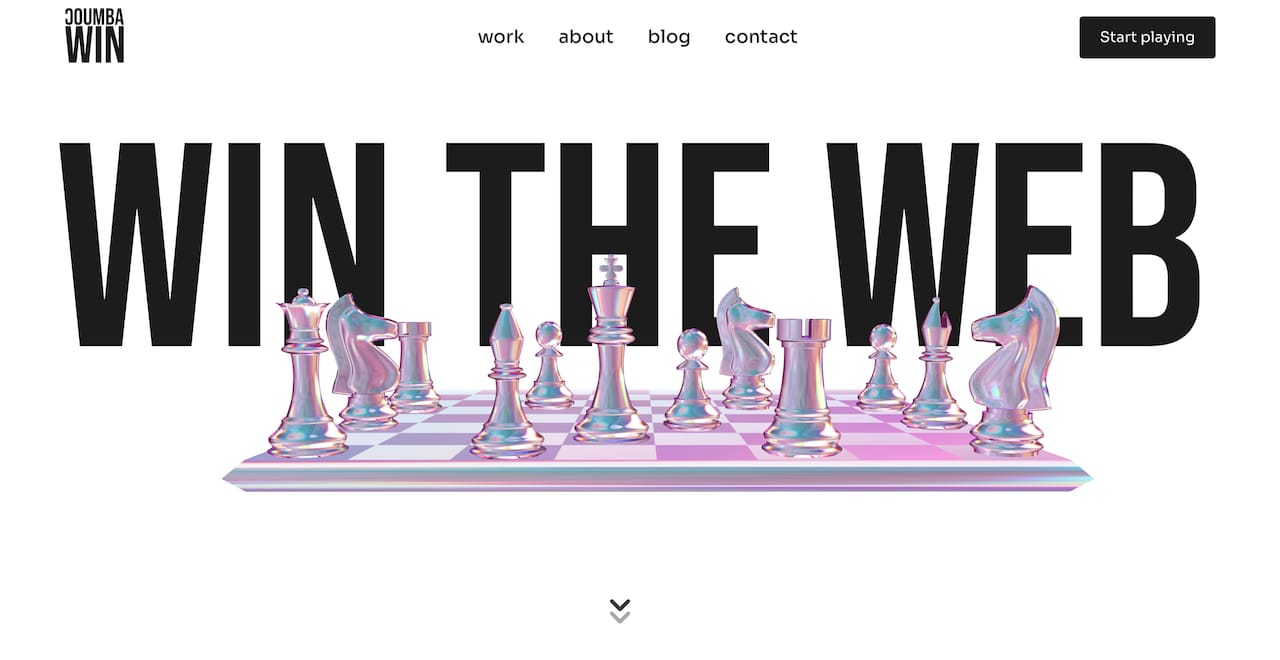
Whether you need a brand style guide to bring consistency to your growing team or a full demo day kit to show up sharp for investors, Coumba Win Design builds the systems that make your brand work as hard as you do. No generic templates. No one-size-fits-all solutions. Just strategic design built specifically for founders who know that how you look is part of how you win.
FAQ
Why does branding matter for startups specifically?
Branding matters for startups because they have no existing reputation to rely on. Strong branding communicates value instantly to customers, investors, and talent who have limited time to evaluate you.
What is a minimum viable brand for a startup?
A minimum viable brand (MVB) includes a logo, color palette, typography, and a positioning statement. It lets startups launch quickly, test market fit, and iterate without overinvesting before positioning is stable.
How does brand consistency affect startup revenue?
Consistent brand presentation increases revenue by 23 to 33%, according to Lucidpress and Nielsen data. Inconsistency, by contrast, leads to customer confusion and higher media spend to compensate for mixed signals.
When should a startup invest in full-scale branding?
Full-scale branding makes the most sense after achieving product-market fit or when entering a market where perception is critical from day one, such as luxury, health, or enterprise software.
How do I measure whether my startup’s branding is working?
Track customer acquisition cost (CAC), website conversion rate, social media engagement, and direct brand search volume. Improvements in these metrics after branding changes indicate your identity is doing its job.
Recommended