
4–12 Weeks to Launch: Website Design Timeline for Founders

4–12 Weeks to Launch: Website Design Timeline for Founders
Most professional small and medium business websites take 4 to 12 weeks from kickoff to launch. Simpler landing pages can go live in a week or two; complex ecommerce or SaaS builds routinely run 12 to 24+ weeks. The two variables that decide where your project lands: how complex the scope is, and how ready your content is on day one.
TL;DR:
- Content readiness significantly impacts project timelines, with final copy and assets needing 1 to 4 weeks to avoid delays and rework.
- Discovery and planning should be completed within 1 to 2 weeks for simple projects, but complex builds may require up to 4 weeks, especially with multiple stakeholders.
- Development durations vary widely, from 3 to over 10 weeks, depending on platform choice, custom integrations, and whether final content is prepared beforehand.
- Parallelizing content creation, design, and SEO tasks can shave weeks off the schedule without sacrificing quality.
- Post-launch QA and stabilization typically require 2 to 4 weeks to identify and fix issues that surface from real user testing.
Table of Contents
- Website Design Timeline Phases at a Glance
- What Happens During Discovery and Planning?
- How Long Does the Design Phase Take?
- What Determines Development Timelines?
- Why Content Readiness Controls Your Whole Schedule
- What Should the Testing and Launch Checklist Cover?
- Sample Timelines by Project Type
- What Causes Delays, and How Do You Prevent Them?
- What Founders Should Demand From Any Web Design Timeline
- Get a Website Timeline Built Around Your Launch Date
- Sources
- FAQ
Website Design Timeline Phases at a Glance
Before diving into the weeds, here’s the fast scan. A standard professional web project moves through canonical phases, and each one has its own rhythm.
- Discovery & planning: 1–2 weeks for simple projects, 3–4 weeks for complex scope
- Design (wireframes + UI): 2–4 weeks
- Development & integrations: 3–10+ weeks depending on custom work
- Content & SEO: runs in parallel, 1–4 weeks to finalize
- QA & launch prep: 1–2 weeks
- Post-launch stabilization: 2–4 weeks of monitoring and fixes
Here’s the part most timelines skip: several of these phases don’t have to happen back to back. Content production can start the moment discovery wraps, design can begin while integrations are still being scoped, and SEO metadata can get built out while developers are still in the CMS. Run phases in parallel where it’s safe, and you can shave real weeks off the calendar without cutting a single deliverable.
What Happens During Discovery and Planning?
Discovery is where a founder either sets the whole project up to move fast, or unknowingly plants the seeds of every delay that follows. This phase produces the brief, the goals, user personas, a sitemap, a list of integrations, and the success metrics by which everyone will judge the finished site.
For most projects, discovery takes 1 to 2 weeks. Complex builds, or ones involving multiple stakeholder interviews, can stretch to 3 or 4. That extra time is rarely wasted. Weak discovery is the single biggest source of scope creep later, because half-answered questions in week one become expensive rebuilds in week eight.
A few things founders can do to keep this phase tight:
- Appoint one decision-maker with final sign-off authority. Committees slow everything.
- Grant access to analytics, hosting, and brand assets before the kickoff call.
- Provide a content owner’s name and contact on day one, not day ten.
- Agree on sign-off deadlines in writing, not “whenever it’s ready.”
Pro Tip: Treat the discovery brief as a contract, not a suggestion. If a feature isn’t in it, assume it’s a future-phase item, not something to squeeze into the current sprint.
How Long Does the Design Phase Take?
Design typically runs 2 to 4 weeks for a small or medium site. Wireframes come first to lock in layout and hierarchy, then high-fidelity mockups translate that structure into the actual look and feel your users will see. Projects that need a full design system or a component library on top of the core pages will run longer, sometimes stretching into a separate parallel track.
What actually controls this timeline isn’t creative talent. It’s feedback discipline. Design-phase slippage is almost always caused by uncontrolled revision loops and design-by-committee reviews, where five stakeholders send five different sets of notes across five separate emails. Consolidating feedback into a single round per major deliverable, rather than trickling in comments over days, is the difference between a two-week design phase and a six-week one.
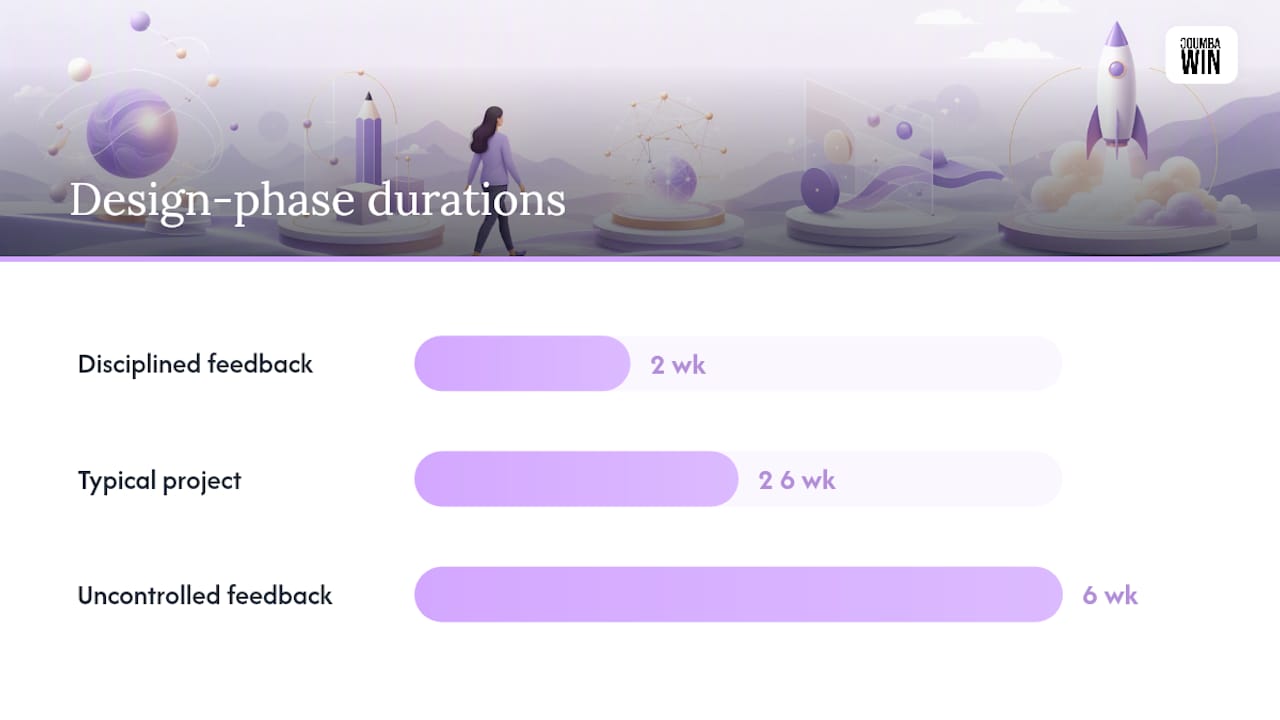
A workable standard: two rounds of revisions per major stage. Not zero, not unlimited. Two.
By the end of this phase you should have in hand:
- A component library covering buttons, forms, cards, and navigation states
- A style guide defining color, type, and spacing rules
- Exportable, developer-ready assets in the correct file formats
What Determines Development Timelines?
Development is where the estimate ranges widen the most, because this phase absorbs every technical decision made (or deferred) earlier in the project. Frontend build, backend logic, CMS configuration, and third-party integrations all live here, and each one can either move quickly or turn into a multi-week detour.
Platform choice matters more than most founders expect. A theme-based builder can get a functional site live in days. A custom framework or headless setup buys more flexibility and performance headroom but adds real weeks, sometimes months, to the schedule.
Integrations are the other wild card. Payment gateways, CRMs, ERPs, single sign-on, and custom APIs each carry their own testing burden, and problems here rarely surface until you’re already deep into QA. A typical development phase runs 3 to 10+ weeks, with the high end reserved for projects stacking multiple custom integrations on top of a bespoke frontend.
Content readiness matters here too, not just in the content phase. Preparing final copy and assets before development begins significantly cuts rework, because developers building against placeholder text almost always have to rebuild layouts once real copy arrives and breaks the spacing they designed around.
To reduce rework at handoff, developers need:
- Finalized design files with every state (hover, error, empty) documented
- A written list of integrations with credentials and API documentation ready
- Clear acceptance criteria for what “done” looks like on each page
Why Content Readiness Controls Your Whole Schedule
Here’s the uncomfortable truth most founders learn the hard way: content, not code, is the most common reason websites launch late. Guides across the industry point to content as the number one delay factor, ahead of technical bugs, ahead of design revisions, ahead of almost everything else on the list.
Content production typically needs 1 to 4 weeks, and the smart move is to run it in parallel with design or early development rather than waiting until the site is “almost done” to start writing. Waiting creates what one industry write-up calls “placeholder hell”: developers build around lorem ipsum text, then have to rebuild once real copy arrives in a different length and tone.
Practical steps that keep content from becoming the bottleneck:
- Lock page templates early so writers know exactly how much space they have
- Assign a specific author to each page, not a vague “marketing will handle it”
- Set image specs (dimensions, format, file size) before anyone starts sourcing photos
- Build an SEO metadata checklist covering titles, descriptions, and alt text per page
Pro Tip: If your launch date is fixed and your content isn’t ready by the start of development, outsource the copy rather than delay the build. A rushed writer beats a stalled developer.
What Should the Testing and Launch Checklist Cover?
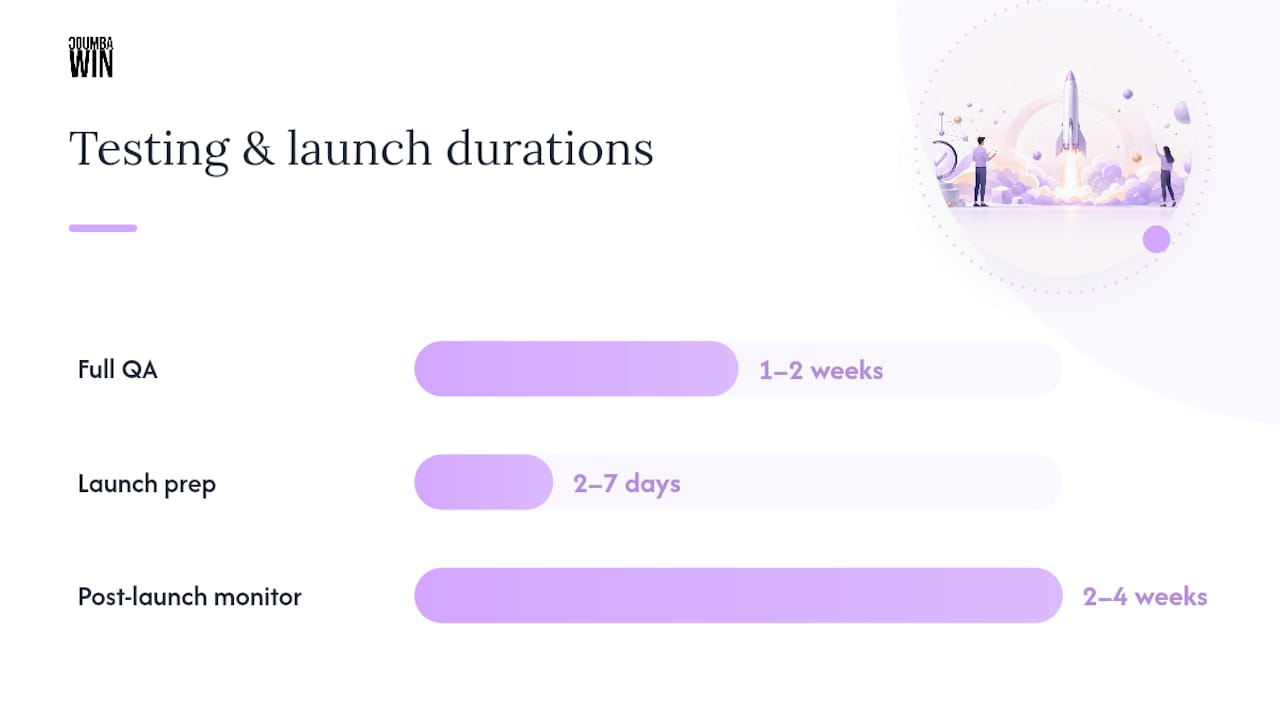
Quality assurance is not the phase to compress just because you’re behind schedule. QA typically takes 1 to 2 weeks, covering cross-device testing, accessibility checks against WCAG standards, Core Web Vitals performance, and verification that every integration actually fires correctly under real conditions.
Standard practice across professional builds breaks the final stretch into these steps:
- Run full QA across devices, browsers, and assistive technology (1–2 weeks)
- Verify DNS records, redirects, analytics tracking, and email deliverability
- Confirm rollback plans exist in case launch reveals a critical issue
- Execute launch prep tasks over a final 2 to 7 days
- Monitor closely for 2 to 4 weeks post-launch, fixing issues as real traffic surfaces them
That post-launch window matters more than founders expect. Real users behave differently than test accounts, and the first month after going live almost always surfaces small issues that no amount of pre-launch testing catches.
Sample Timelines by Project Type
Numbers get more useful once you attach them to an actual project shape. Here’s how the phases stack up across four common builds, based on sample timelines reported across industry guides.
- Landing page: 1 to 3 weeks total. Discovery and content can often happen in the same week, design runs a few days on a single page, and a template-based builder gets you live fast.
- Small business site (5–10 pages): 4 to 8 weeks. Standard discovery, a proper design pass, moderate content needs, and light integrations like a contact form or booking widget.
- Ecommerce site: 8 to 16+ weeks. Product catalog structure, payment gateway integration, inventory syncing, and shipping logic all add real development and QA time.
- SaaS or custom platform: 12 to 24+ weeks. Custom user flows, authentication, dashboards, and often a headless or fully bespoke architecture push this to the long end of every phase.
Two modifiers change these numbers fast. Choosing a DIY builder or theme-based platform trims development significantly, while a custom headless build adds real weeks to nearly every phase. And special cases, redesigns, platform migrations, or multilingual sites, typically add 2 to 6 weeks on top of a comparable new build, depending on how much legacy content and infrastructure needs to be carried over. If you’re weighing a rebuild against starting fresh, it’s worth understanding what a redesign actually changes before you commit to either path.
What Causes Delays, and How Do You Prevent Them?
Every blown deadline traces back to a short list of repeat offenders. Knowing them in advance is most of the battle.
- Content readiness: the single biggest delay driver, as covered above. Final copy late means development stalls or rebuilds.
- Approval delays: a decision-maker on vacation, or a committee that can’t agree, adds days that never get recovered.
- Scope creep: new features requested mid-build without adjusting the timeline or budget.
- Integration surprises: third-party APIs with outdated documentation or unexpected rate limits.
- Team bandwidth: an agency or freelancer juggling too many concurrent projects.
The fix for most of these is procedural, not technical:
- Name one single decision-maker before the project starts, and hold that person to sign-off deadlines
- Set a hard content deadline that precedes the development start date, not one that trails alongside it
- Parallelize content, SEO, and design work wherever the dependencies allow it safely
- Consider a phased launch: ship the core site first, add secondary features in a fast-follow release
Pro Tip: Not every delay is bad. Complex integrations, legal review, or accessibility compliance work are worth extending the timeline for. The goal isn’t the fastest launch. It’s the fastest launch that doesn’t need to be rebuilt in three months.
What Founders Should Demand From Any Web Design Timeline
Startups rarely have the luxury of a twelve-week runway before they need something live. That’s exactly why an MVP-first release, a prioritized feature list, and a staged content strategy matter more for founders than for established companies with slack in the budget. Ship the core experience that proves the value proposition, then layer in secondary features once real users are generating real feedback.
Coumba Win Design has applied this approach across projects ranging from educational platform redesigns to brand overhauls for apparel companies entering new markets. Whatever agency or partner you choose, require a written scope document with a phase-by-phase timeline, named milestones, explicit acceptance criteria, and a clear owner for content. If a proposal doesn’t spell those four things out before you sign, that’s the gap that becomes your delay three weeks in.
— Coumba Evelyn
Get a Website Timeline Built Around Your Launch Date
Most of the delays covered above come down to one thing: nobody set a governed timeline with real milestones before the project started. Some agencies build every engagement around a phase-by-phase schedule with named deliverables at each gate, so a founder always knows what’s due, when, and who owns it.

That structure matters most for startups working against a fundraising deadline, a launch event, or a fixed runway. A prebuilt component library also means development doesn’t start from zero, which is one of the fastest ways to compress the build phase without cutting quality anywhere. If you’re planning a launch and want a realistic week-by-week schedule instead of a vague estimate, request a project timeline from Coumba Win Design and get a kickoff date on the calendar.
Sources
The timelines and phase ranges throughout this guide draw on the following sources:
- How long does it take to build a website? — Elementor
- How long does it take to build a website? — Shopify
- Website Development Timeline: 2–24 Weeks Guide — Vezert
- Web design timeline: a complete guide to project planning — Ulement
FAQ
How Long Does a Typical Website Design Timeline Take?
A professional small or medium business site takes 4 to 12 weeks from kickoff to launch, while simple landing pages can go live in a week or two and complex ecommerce or SaaS builds often run 12 to 24+ weeks.
What Is the Biggest Factor That Delays a Website Launch?
Content readiness is the most common cause of delay. Sites built against placeholder copy almost always require rework once final content arrives, which pushes back the entire schedule.
How Many Rounds of Design Revisions Should I Expect?
A workable standard is two rounds of revisions per major stage. More than that tends to signal unconsolidated feedback rather than genuinely unresolved design problems.
Can Content and Development Happen at the Same Time?
Yes, and doing so is one of the most effective ways to shorten a website design timeline. Running content production in parallel with design or early development, rather than sequentially, can save real weeks on the calendar.
How Long Should I Budget for Post-Launch Fixes?
Plan for 2 to 4 weeks of active monitoring and quick fixes after launch. Real user behavior almost always surfaces small issues that pre-launch testing doesn’t catch.