Manage Design Assets for Your Growing Startup

Manage Design Assets for Your Growing Startup
Design asset management is the practice of centralizing, organizing, and controlling every brand file your startup produces, from logos and color tokens to UI components and motion graphics. Get it wrong and you end up with assets scattered across 4–7 platforms, creating version conflicts that quietly destroy brand consistency. Get it right and your whole team moves faster, your brand stays sharp, and new hires hit the ground running. Tools like Cloudinary DAM, zeroheight, and Brand Vault exist precisely to solve this problem for startups that need to manage design assets without hiring a full operations team.
What tools do you need to manage design assets in a growing startup?
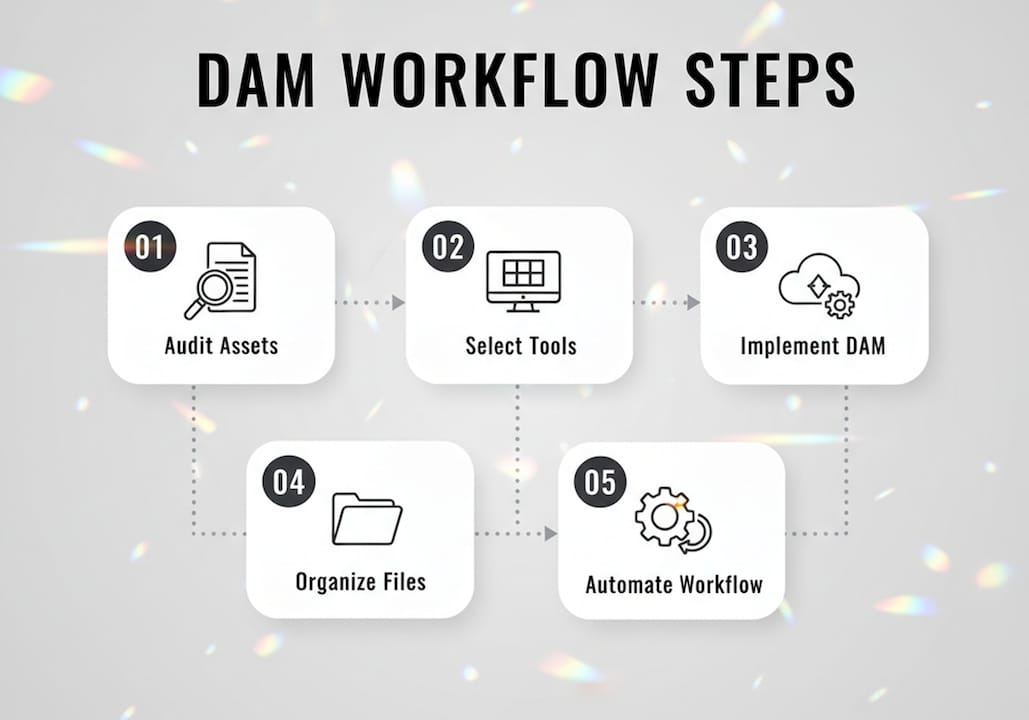
Digital Asset Management, or DAM, is the industry term for what most founders casually call “organizing design files.” The difference matters. A true DAM does things generic cloud storage simply cannot.
Generic cloud storage lacks the metadata automation, version control, and audit logs that prevent brand drift. Dropping your logo into a shared Google Drive folder is not asset management. It is a time bomb.
Startup-friendly DAM solutions cover a wide range of budgets. Pricing runs from free brand kits to operational vaults at $499 per month, covering teams of 2–50 people. That range means you can start lean and upgrade as your headcount grows.
Here is a quick comparison of tools worth knowing:
| Tool | Core strength | Price range |
|---|---|---|
| Brand Vault (Brandr AI) | Brand kit storage, AI tagging, version control | Free to $499/month |
| Cloudinary DAM | AI workflow agents, rights management, media delivery | Custom pricing |
| zeroheight | Design system documentation, Figma sync | Free to paid tiers |
| LottieFiles DAM | Motion assets, UI components, single source of truth | Free to paid tiers |
Beyond storage, you need design system documentation. zeroheight links Figma libraries and code tokens to keep design and development aligned without manual syncing. That connection is what separates a living design system from a PDF style guide nobody reads.
Pro Tip: Before you pick a DAM, audit where your assets actually live right now. Founder’s Drive, designer’s Dropbox, freelancer’s iCloud. Map every location first, then choose a tool that can consolidate them.
AI-driven automation is now a standard feature in serious DAM platforms. Cloudinary DAM includes AI agents for metadata enrichment, workflow automation, and rights management. That means less manual tagging and fewer approval bottlenecks as your team scales.

How do you organize design files to keep your brand consistent?
Structure is the foundation of good design asset management. Without it, even the best DAM tool becomes a fancy mess.
Start with a clear folder hierarchy. Organize by brand tier first (core brand, product, marketing), then by asset type (logos, typography, icons, photography), then by version. This three-level structure makes files findable without tribal knowledge.
Naming conventions are non-negotiable. A file called “logo_final_FINAL_v3_USE THIS.png” is a symptom of a broken system. Adopt a convention like [brand]-[asset-type]-[variant]-[version] and enforce it from day one.
Best practices for organizing startup brand assets:
-
Use a single source of truth. True DAM systems unify images, UI components, and motion assets so design, marketing, and product teams pull from the same library.
-
Link your Figma libraries to your documentation. Sync-by-default workflows propagate asset updates automatically from design tools to documentation, avoiding technical debt.
-
Tag everything with metadata. AI tagging tools in platforms like Cloudinary make assets searchable by color, content, and usage rights.
-
Separate active assets from archived ones. A cluttered library slows everyone down.
-
Assign ownership. Every asset category should have one person responsible for keeping it clean.
Pro Tip: Schedule a 30-minute “library audit” every month. Delete duplicates, archive outdated versions, and update metadata. It takes less time than one confused Slack thread asking “which logo do I use?”
Brand drift is the slow, painful process where your visual identity gets inconsistent across channels because nobody is managing the source files. Effective design asset management requires linking metadata automation, version control, audit logs, and synced design system documentation to control brand integrity. That is the only way to stop drift before it starts.
What workflows help startups manage asset approvals efficiently?
A clear asset lifecycle is what separates a team that ships fast from one that spends three days tracking down the “approved” version of a banner. The lifecycle has six stages: upload, tagging, review, approval, publishing, and archiving.
Here is how to run each stage without losing your mind:
-
Upload. All new assets go into a designated intake folder, never directly into the live library.
-
Tagging. AI tools handle initial metadata. A human spot-checks for accuracy before the asset moves forward.
-
Review. The design lead or brand manager checks for consistency with the style guide.
-
Approval. A formal sign-off step, tracked in the DAM or a project management tool like Notion or Linear.
-
Publishing. The approved asset moves to the live library and gets distributed to relevant channels.
-
Archiving. Superseded versions move to an archive folder, not the trash. You may need them for legal or historical reference.
Manual review loops are the biggest time killer in this process. Agent-driven automation streamlines approvals and enforces governance without adding headcount. Cloudinary’s Workflow Agent, for example, handles review routing, rights checks, and syncing to your CMS automatically.
| Stage | Manual workflow | Automated workflow |
|---|---|---|
| Tagging | Designer adds tags by hand | AI enriches metadata on upload |
| Rights check | Legal team reviews each asset | Automated rights management flags issues |
| Approval routing | Slack messages and email chains | Agent routes to correct approver automatically |
| Publishing | Manual upload to each channel | Auto-sync to CMS and PIM on approval |
Pro Tip: Build your approval workflow before you need it. Setting up routing rules when you have five assets is easy. Doing it when you have 500 is a nightmare.
AI-powered asset lifecycle automation frees senior creative talent from manual tasks, letting them focus on actual design work. That is a real competitive advantage for a startup where every hour of senior time counts.
How do you avoid pitfalls and scale your asset management as you grow?
The most common mistake startups make is waiting too long to build a real system. By the time the chaos is obvious, the rework is expensive.
Watch out for these traps:
-
Delayed design system adoption. Early adoption of documented design systems reduces onboarding time from weeks to hours and prevents the component inconsistencies that cause expensive fixes later.
-
Over-reliance on generic cloud storage. Dropbox and Google Drive are great for documents. They are not DAMs. They lack the governance features you need as your brand grows.
-
Unmanaged versioning. Delayed design system implementation and unmanaged asset versioning lead to costly rework and collaboration chaos as your team scales.
-
No access controls. When everyone can edit everything, someone will accidentally overwrite the master logo. Granular permissions prevent this.
-
Skipping documentation. A design system nobody can find is not a design system. Document it in a tool like zeroheight and link it from your onboarding checklist.
Scaling your asset management means thinking about multi-workspace DAM tools that support separate brand lines or product verticals. It also means building AI-compatible brand identities structured for marketing and content platform consistency, not just static file collections.
Governance is not a bureaucracy tax. It is the thing that lets your fifth designer work as confidently as your first.
Pro Tip: Turn on audit logging from day one. Knowing who changed what and when is not just useful for debugging. It is your legal protection if a brand dispute ever comes up.
Good documentation also pays off when you bring on new hires. A well-organized DAM with clear naming conventions and a linked design system means a new designer can find what they need on day one, without a two-hour onboarding call. That is time you get back every single time you hire.
Key Takeaways
Startups that build a centralized DAM with a linked design system and automated workflows protect brand consistency, cut onboarding time, and avoid the costly rework that comes from disorganized assets.
| Point | Details |
|---|---|
| Use a true DAM, not cloud storage | Generic storage lacks version control, metadata, and audit logs needed for brand integrity. |
| Link your design system to your DAM | Syncing Figma libraries and code tokens prevents technical debt and keeps teams aligned. |
| Automate your approval workflow | AI-driven routing and rights checks cut manual review loops and speed up publishing. |
| Adopt early, not when chaos hits | Building your system before you need it saves weeks of rework as your team grows. |
| Document everything for new hires | A well-organized library with clear naming conventions cuts onboarding from weeks to hours. |
Why I think most startups get this completely backwards
Here is my honest take after working with founders who are building fast and designing on the fly: most of you treat asset management like a housekeeping task. Something you will get to eventually. After the pitch. After the launch. After the next hire.
I get it. I have been there. The first time I watched a founder send a pixelated logo to a conference organizer because nobody could find the vector file, I felt that pain personally. It is embarrassing, and it is completely avoidable.
The thing founders miss is that a good DAM is not overhead. It is a force multiplier. When your designer does not spend 45 minutes hunting for the right file version, that time goes into actual design work. When your new marketing hire can find every approved asset on day one, your brand stays consistent without a single extra meeting.
I have also seen what happens when startups finally adopt zeroheight or a proper DAM after a year of chaos. The relief is real. But so is the rework. Retroactively tagging 800 files and reconciling six versions of a color palette is nobody’s idea of a good time.
My advice? Treat your first design system documentation as a product launch. Give it a deadline. Assign an owner. Review it quarterly. The startups I have seen do this early are the ones whose brands still look sharp at Series B.
— Coumba Evelyn
How Coumba Win Design helps startups get their assets under control
If reading this made you realize your design files are currently living in four different places (no judgment, we have all been there), Coumba Win Design builds the systems that fix exactly that.

Coumba Win Design creates scalable style guides that give your team a single, documented source of truth for every brand decision, from color tokens to typography rules. The design system components library keeps your product and marketing teams pulling from the same approved building blocks. And if you have a demo day, fundraise, or product launch coming up, the Demo Day Kit gets your brand assets pitch-ready in 14 days. Coumba Win Design works with founders who see design as a competitive advantage, not an afterthought.
FAQ
What is design asset management for startups?
Design asset management is the practice of centralizing and organizing all brand and design files in a structured system with version control, metadata, and access permissions. It prevents brand inconsistencies and version conflicts as your team grows.
How is a DAM different from Google Drive or Dropbox?
A true DAM includes metadata automation, version control, audit logs, and approval workflows that generic cloud storage does not offer. These features are what prevent brand drift and keep teams aligned.
When should a startup start using a DAM?
Start before you think you need it. Early adoption of a documented design system reduces onboarding time from weeks to hours and prevents the expensive component inconsistencies that come from waiting too long.
Can AI really help with design asset management?
Yes. Cloudinary DAM uses AI agents to automate metadata tagging, rights management, and approval routing, cutting manual review loops and freeing your design team for creative work.
What is the most common mistake startups make with design assets?
The most common mistake is relying on generic cloud storage instead of a purpose-built DAM. Without version control and audit logs, brand drift and file conflicts are inevitable as the team scales.
Recommended